


























1 / 3
0
Views
0
Downloads



0.0
0
0 Likes
Circulatory Activity Sheet: Anatomy Focus
0 Views
0 Downloads
Paste this activity's link or code into your existing LMS (Google Classroom, Canvas, Teams, Schoology, Moodle, etc.).
Students can open and work on the activity right away, with no student login required.
You'll still be able to track student progress and results from your teacher account.
Information
Description
What It Is:
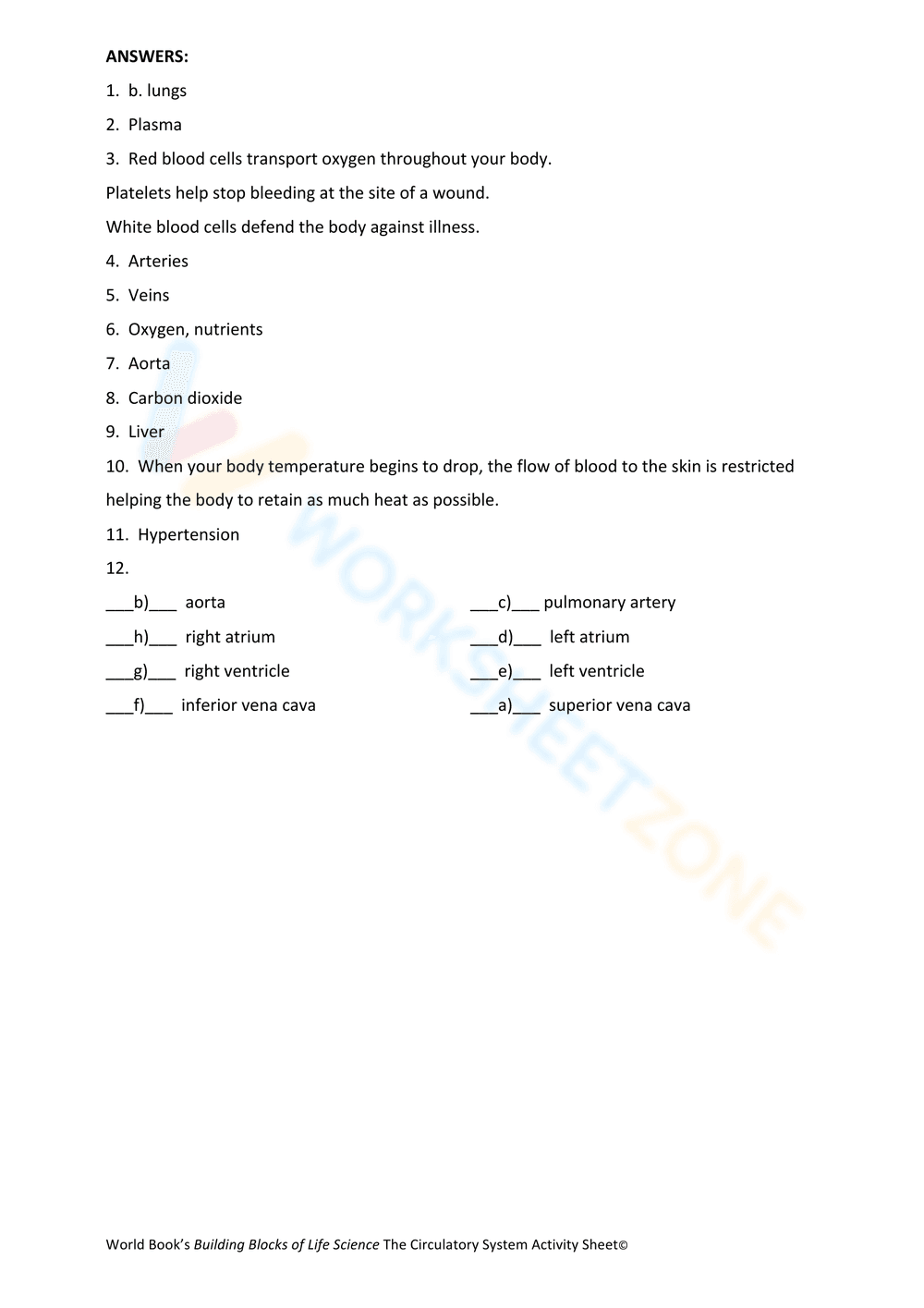
This is a science worksheet focusing on the circulatory system. It includes multiple-choice questions, fill-in-the-blank questions, and short answer questions about blood components, blood vessels, and the heart. Students are asked to identify components of the circulatory system, explain the functions of different blood cells (red blood cells, platelets, white blood cells), and identify blood vessels that carry blood to and from the heart.
Grade Level Suitability:
This worksheet is suitable for grades 4-6. The questions require a basic understanding of the circulatory system, its components, and their functions, which is typically covered in these grade levels. The vocabulary and complexity of the questions are appropriate for this age group.
Why Use It:
This worksheet reinforces learning about the circulatory system by providing different types of questions that test comprehension and recall. It helps students understand the functions of different blood cells and blood vessels, and reinforces the role of the heart. It can be used as a review activity, a quiz, or a homework assignment.
How to Use It:
Students should read the instructions carefully and answer each question to the best of their ability. For the multiple-choice question, they should select the correct answer. For the fill-in-the-blank questions, they should provide the missing information. For the short answer questions, they should write a brief explanation. The worksheet can be completed individually or in pairs.
Target Users:
The target users are elementary and middle school students learning about the circulatory system in their science classes. It is also suitable for teachers who need a supplemental activity or assessment tool to reinforce the concepts of the circulatory system. Homeschooling parents can also use it as part of their science curriculum.
This is a science worksheet focusing on the circulatory system. It includes multiple-choice questions, fill-in-the-blank questions, and short answer questions about blood components, blood vessels, and the heart. Students are asked to identify components of the circulatory system, explain the functions of different blood cells (red blood cells, platelets, white blood cells), and identify blood vessels that carry blood to and from the heart.
Grade Level Suitability:
This worksheet is suitable for grades 4-6. The questions require a basic understanding of the circulatory system, its components, and their functions, which is typically covered in these grade levels. The vocabulary and complexity of the questions are appropriate for this age group.
Why Use It:
This worksheet reinforces learning about the circulatory system by providing different types of questions that test comprehension and recall. It helps students understand the functions of different blood cells and blood vessels, and reinforces the role of the heart. It can be used as a review activity, a quiz, or a homework assignment.
How to Use It:
Students should read the instructions carefully and answer each question to the best of their ability. For the multiple-choice question, they should select the correct answer. For the fill-in-the-blank questions, they should provide the missing information. For the short answer questions, they should write a brief explanation. The worksheet can be completed individually or in pairs.
Target Users:
The target users are elementary and middle school students learning about the circulatory system in their science classes. It is also suitable for teachers who need a supplemental activity or assessment tool to reinforce the concepts of the circulatory system. Homeschooling parents can also use it as part of their science curriculum.


