


























1 / 2
0
Views
0
Downloads

0.0
0
0 Likes
Labeling Plant and Animal Cell Structures Activity
0 Views
0 Downloads
Paste this activity's link or code into your existing LMS (Google Classroom, Canvas, Teams, Schoology, Moodle, etc.).
Students can open and work on the activity right away, with no student login required.
You'll still be able to track student progress and results from your teacher account.
Information
Description
What It Is:
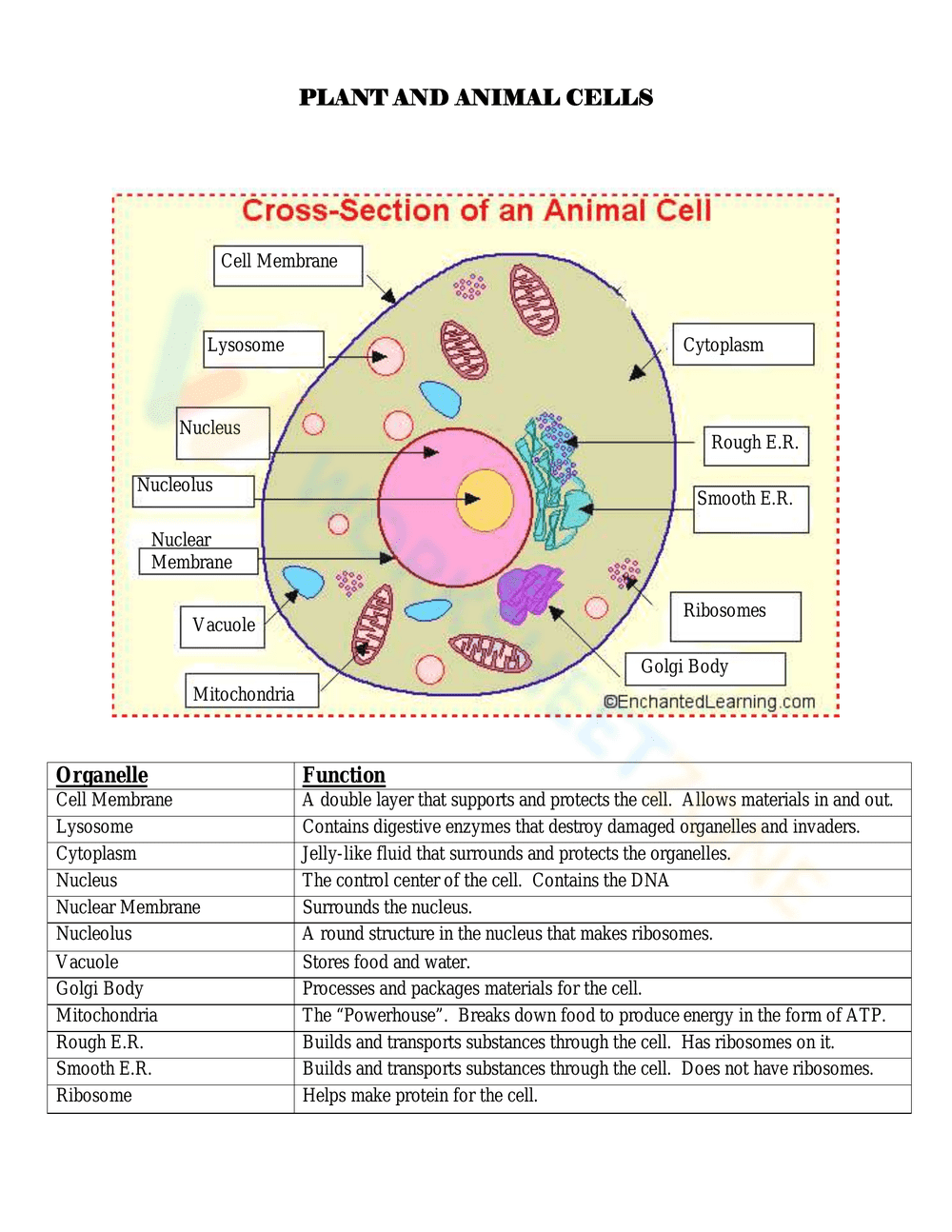
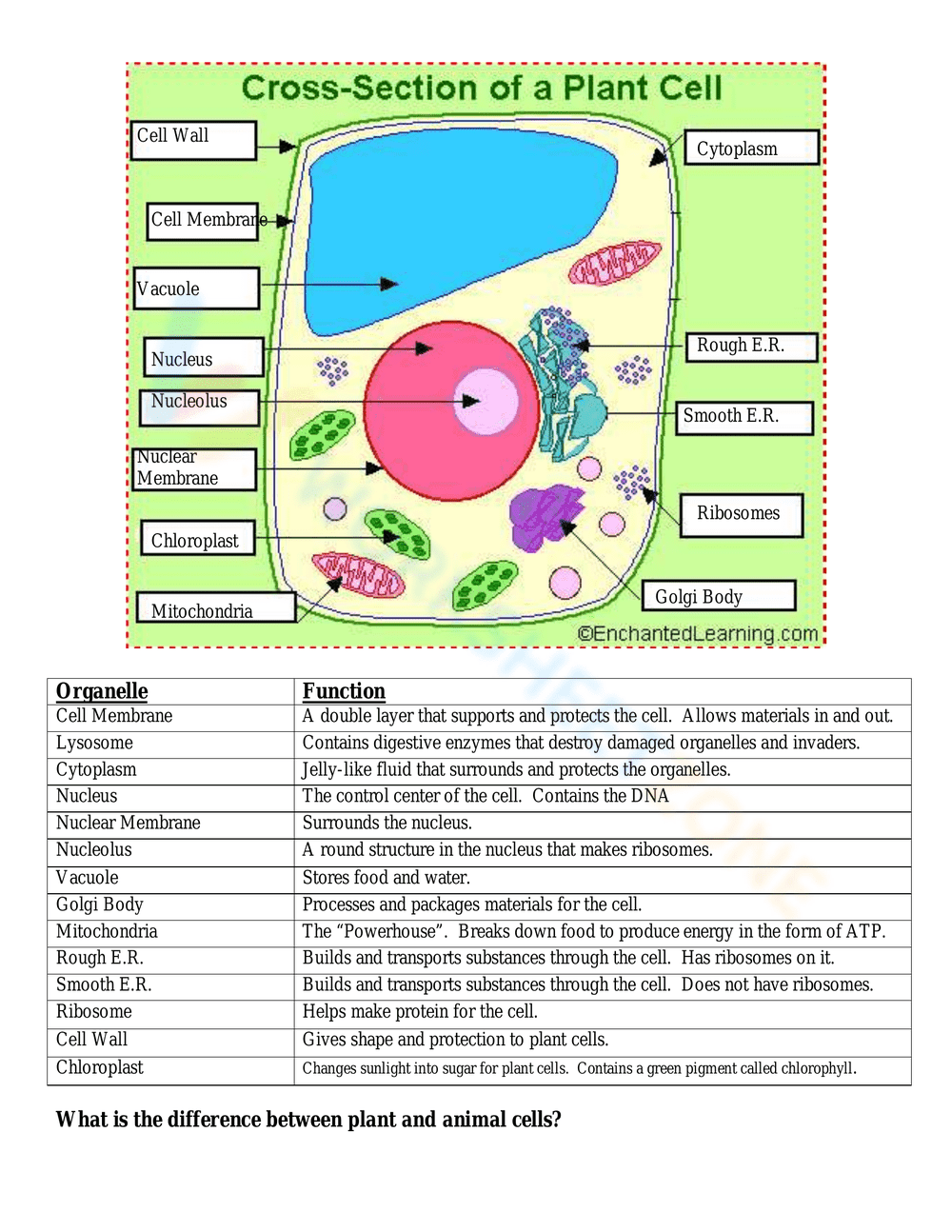
This is a science worksheet showing a cross-section diagram of an animal cell. The diagram labels the cell membrane, lysosome, nucleus, nucleolus, nuclear membrane, vacuole, mitochondria, cytoplasm, rough ER, smooth ER, ribosomes, and Golgi body. Below the diagram is a table listing each organelle and its function within the cell.
Grade Level Suitability:
This worksheet is suitable for grades 6-8. The diagram and descriptions are detailed enough for middle school students learning about cell biology, but not overly complex. The vocabulary is appropriate for this age range.
Why Use It:
This worksheet helps students learn the different parts of an animal cell and understand the function of each organelle. It provides a visual representation of the cell and connects the organelle names with their specific roles, aiding in comprehension and memorization.
How to Use It:
Students can use this worksheet to study the structure of an animal cell. It can be used as a reference guide while learning about cells, or as a review tool to test knowledge. Students can label a blank diagram using the information provided or answer questions about the function of each organelle.
Target Users:
The target users are middle school students (grades 6-8) studying life science and cell biology. It is also suitable for teachers looking for a visual aid and informational resource to teach about animal cells.
This is a science worksheet showing a cross-section diagram of an animal cell. The diagram labels the cell membrane, lysosome, nucleus, nucleolus, nuclear membrane, vacuole, mitochondria, cytoplasm, rough ER, smooth ER, ribosomes, and Golgi body. Below the diagram is a table listing each organelle and its function within the cell.
Grade Level Suitability:
This worksheet is suitable for grades 6-8. The diagram and descriptions are detailed enough for middle school students learning about cell biology, but not overly complex. The vocabulary is appropriate for this age range.
Why Use It:
This worksheet helps students learn the different parts of an animal cell and understand the function of each organelle. It provides a visual representation of the cell and connects the organelle names with their specific roles, aiding in comprehension and memorization.
How to Use It:
Students can use this worksheet to study the structure of an animal cell. It can be used as a reference guide while learning about cells, or as a review tool to test knowledge. Students can label a blank diagram using the information provided or answer questions about the function of each organelle.
Target Users:
The target users are middle school students (grades 6-8) studying life science and cell biology. It is also suitable for teachers looking for a visual aid and informational resource to teach about animal cells.


