


























1 / 2
0
Views
0
Downloads

0 Likes
Practice: Names & Formulas of Acids
0 Views
0 Downloads
Paste this activity's link or code into your existing LMS (Google Classroom, Canvas, Teams, Schoology, Moodle, etc.).
Students can open and work on the activity right away, with no student login required.
You'll still be able to track student progress and results from your teacher account.
Information
Description
What It Is:
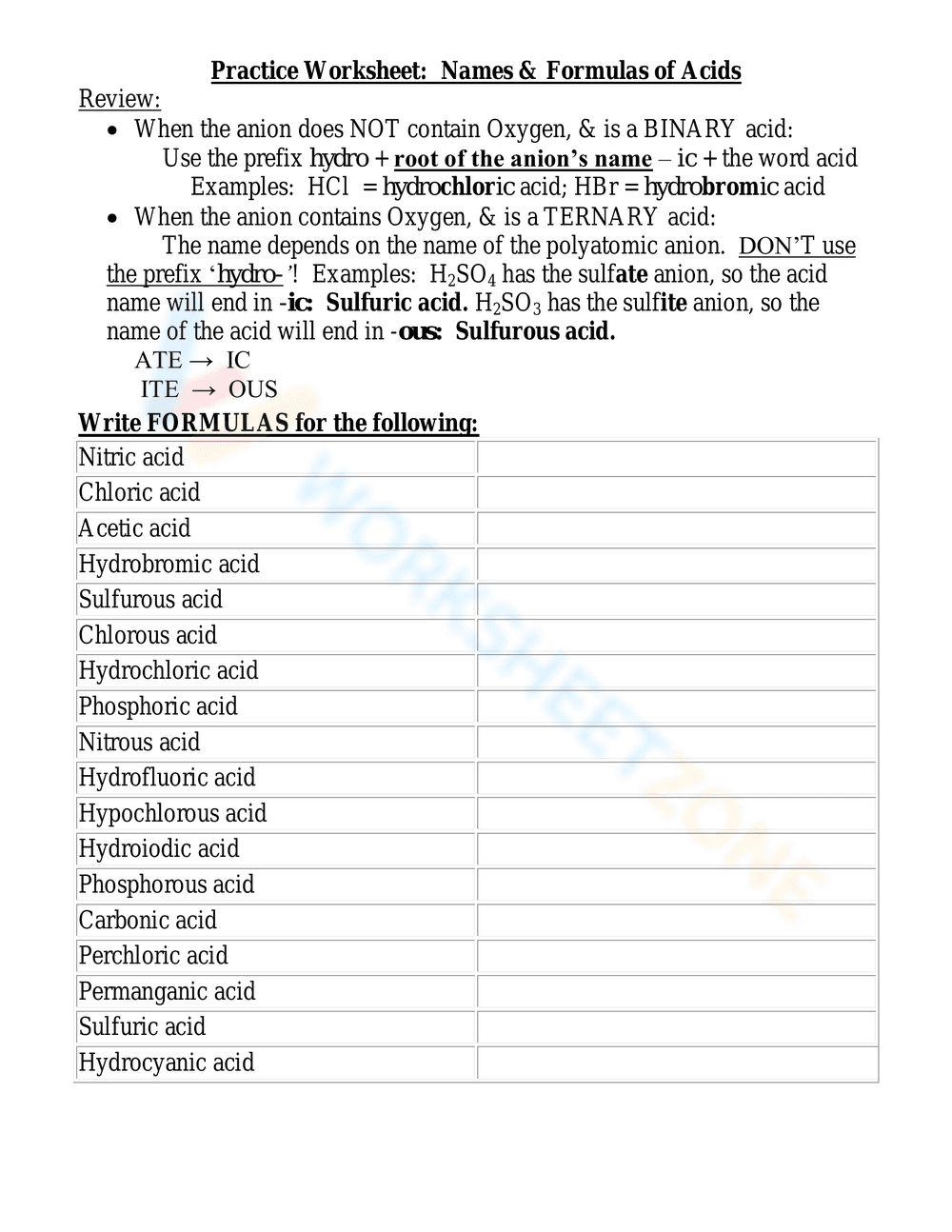
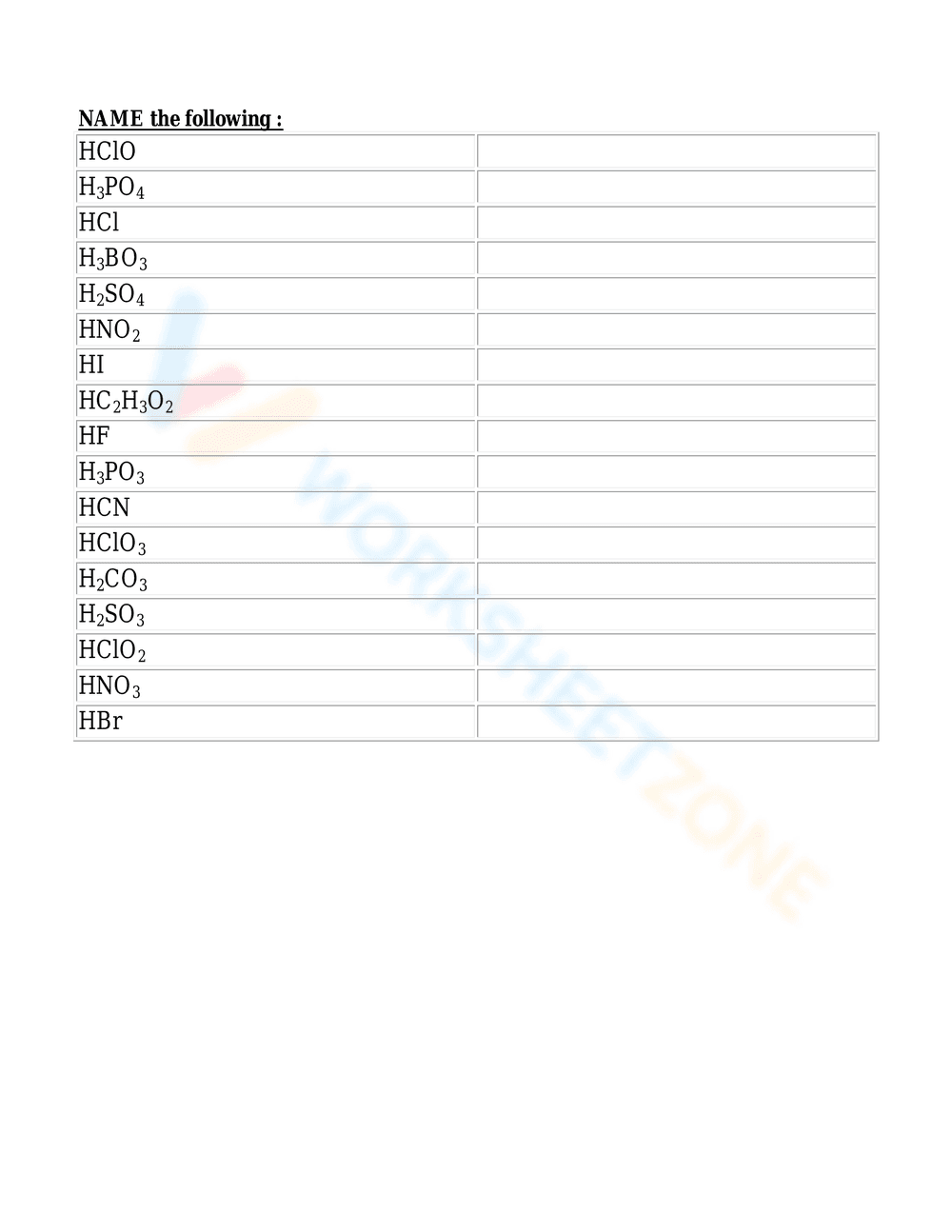
This is a chemistry practice worksheet focused on naming and writing formulas for acids. It provides a review of the rules for binary and ternary acids, including how the presence of oxygen in the anion affects the naming convention (hydro- prefix, -ic, -ous suffixes). The worksheet then presents a list of 18 acids by name (Nitric acid, Chloric acid, Acetic acid, etc.) and requires the student to write the corresponding chemical formula for each.
Grade Level Suitability:
This worksheet is most suitable for high school chemistry students, specifically grades 10-12. It requires a foundational understanding of chemical nomenclature, polyatomic ions, and basic chemical formulas, which are typically covered in high school chemistry courses.
Why Use It:
This worksheet reinforces the rules for naming acids and writing their formulas, a fundamental skill in chemistry. It helps students connect the name of an acid to its chemical composition and provides practice in applying these rules to a variety of common acids. It helps build a strong foundation for understanding chemical reactions and stoichiometry.
How to Use It:
Students should first review the rules for naming binary and ternary acids provided at the top of the worksheet. Then, for each acid listed, they should write the corresponding chemical formula in the provided blank space. Students may need to consult a periodic table and a list of common polyatomic ions to complete the worksheet accurately.
Target Users:
The target users are high school chemistry students learning about acids and bases, as well as teachers looking for practice materials to reinforce these concepts. It is also suitable for students reviewing chemistry concepts for standardized tests.
This is a chemistry practice worksheet focused on naming and writing formulas for acids. It provides a review of the rules for binary and ternary acids, including how the presence of oxygen in the anion affects the naming convention (hydro- prefix, -ic, -ous suffixes). The worksheet then presents a list of 18 acids by name (Nitric acid, Chloric acid, Acetic acid, etc.) and requires the student to write the corresponding chemical formula for each.
Grade Level Suitability:
This worksheet is most suitable for high school chemistry students, specifically grades 10-12. It requires a foundational understanding of chemical nomenclature, polyatomic ions, and basic chemical formulas, which are typically covered in high school chemistry courses.
Why Use It:
This worksheet reinforces the rules for naming acids and writing their formulas, a fundamental skill in chemistry. It helps students connect the name of an acid to its chemical composition and provides practice in applying these rules to a variety of common acids. It helps build a strong foundation for understanding chemical reactions and stoichiometry.
How to Use It:
Students should first review the rules for naming binary and ternary acids provided at the top of the worksheet. Then, for each acid listed, they should write the corresponding chemical formula in the provided blank space. Students may need to consult a periodic table and a list of common polyatomic ions to complete the worksheet accurately.
Target Users:
The target users are high school chemistry students learning about acids and bases, as well as teachers looking for practice materials to reinforce these concepts. It is also suitable for students reviewing chemistry concepts for standardized tests.


