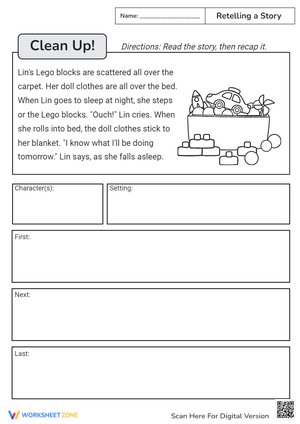
The growth of a young learner is built on a series of small but vital cognitive milestones. Every time a student interacts with a retelling a story worksheets page, they are doing more than just answering questions. They are practicing the analytical control and spatial awareness that form the bedrock of their future literacy and communication skills. Our materials are designed to follow a logical progression that honors these developmental stages, providing the right level of challenge at the right time during the literacy block.
Scaffolding is a core part of how we design every resource in our library. We start by providing a clear framework that supports the student as they take their first steps into a new subject like narrative structure. As they gain confidence, the level of support gradually shifts, encouraging them to think more independently and solve problems on their own. This careful balance prevents the brain from feeling overwhelmed and keeps the learner in a state of productive focus. Explore our reading comprehension skills blog for more inspiration.
Fine motor development is closely tied to how well a child can express their thoughts on paper later in life. The simple act of staying within the lines or labeling story arcs clearly builds the muscle memory needed for fluent handwriting and analytical accuracy. These activities provide a low-stress way for kids to practice these physical skills while they are also learning their core subjects. It is a dual-purpose approach that ensures every minute of practice time is working toward a larger goal of academic readiness in every lesson.
Visual organization is another key skill that students develop as they navigate a structured page. Learning how to read instructions from left to right and top to bottom is a major step in becoming a self-sufficient student. Our retelling a story worksheets use clean layouts and bold lines to help students stay organized and focused on the information that matters most. This clarity helps build the mental stamina required for more complex tasks. Our retelling a story worksheets are the perfect foundation for this journey today.
Your commitment to their growth makes all the difference, so find your next set of developmental tools right now. At Worksheetzone, we pride ourselves on creating resources that align with proven educational theories to support every stage of a child's journey. By choosing materials that prioritize these developmental needs, you are giving your learners a strong foundation to build upon for years to come. Explore our collection and find the perfect match for your students' current milestones today effectively during school hours.
Frequently Asked Questions
Question 1: What specific literacy skills are taught in these retelling a story worksheets?
Our retelling a story worksheets focus on identifying the beginning, middle, and end of a narrative, as well as analyzing character motivations and settings. Students learn to sequence events logically and include key details that demonstrate their understanding of story structure. Mastering these skills is a critical requirement for early linguistic literacy, helping children develop the critical thinking needed for success in more advanced language arts coursework later in their academic journey.
Question 2: How can retelling a story worksheets improve overall comprehension?
By using retelling a story worksheets, students learn to activate their working memory and organize complex information into a coherent summary. This mental exercise builds the cognitive stamina needed for deep reading and effective communication. As they practice building these narrative bridges, their overall reading fluency and critical thinking skills improve significantly throughout their academic career, ensuring they are prepared for the high standards of future testing today.
Question 3: Are retelling a story worksheets suitable for small group intervention?
Absolutely, retelling a story worksheets are an excellent resource for targeted small group instruction or literacy centers. Teachers can provide different prompts based on student reading levels, ensuring that every learner is motivated and appropriately challenged. The clear and professional design of our PDF files allows educators to provide immediate feedback, helping students identify and correct common narrative errors before they become ingrained habits throughout the school year effectively.
Question 4: What are the best tools for completing these retelling a story worksheets?
We recommend using a sharp pencil and highlighters for identifying key passages within the text. The clean lines and high-resolution designs of our PDFs allow students to experiment with color-coding different story elements or eras. Encouraging students to use a variety of tools helps them take creative risks and express their unique artistic style while they learn about the beauty and complexity of language today at Worksheetzone effectively.












 Interactive Worksheet Maker
 Quiz Maker
 Word Search Maker
 Crossword Puzzle Maker
 Word Scramble Generator
 Sentence Scramble Generator
 Handwriting Worksheet Generator
 Name Tracing Generator
 Fill In The Blank Generator